Crane Operators and Rigging in Nairobi
A crane is only as safe as the person operating it. We supply certified operators with every machine we hire out, and we also provide operators for client-owned cranes where a site has the machine but not the ticket.
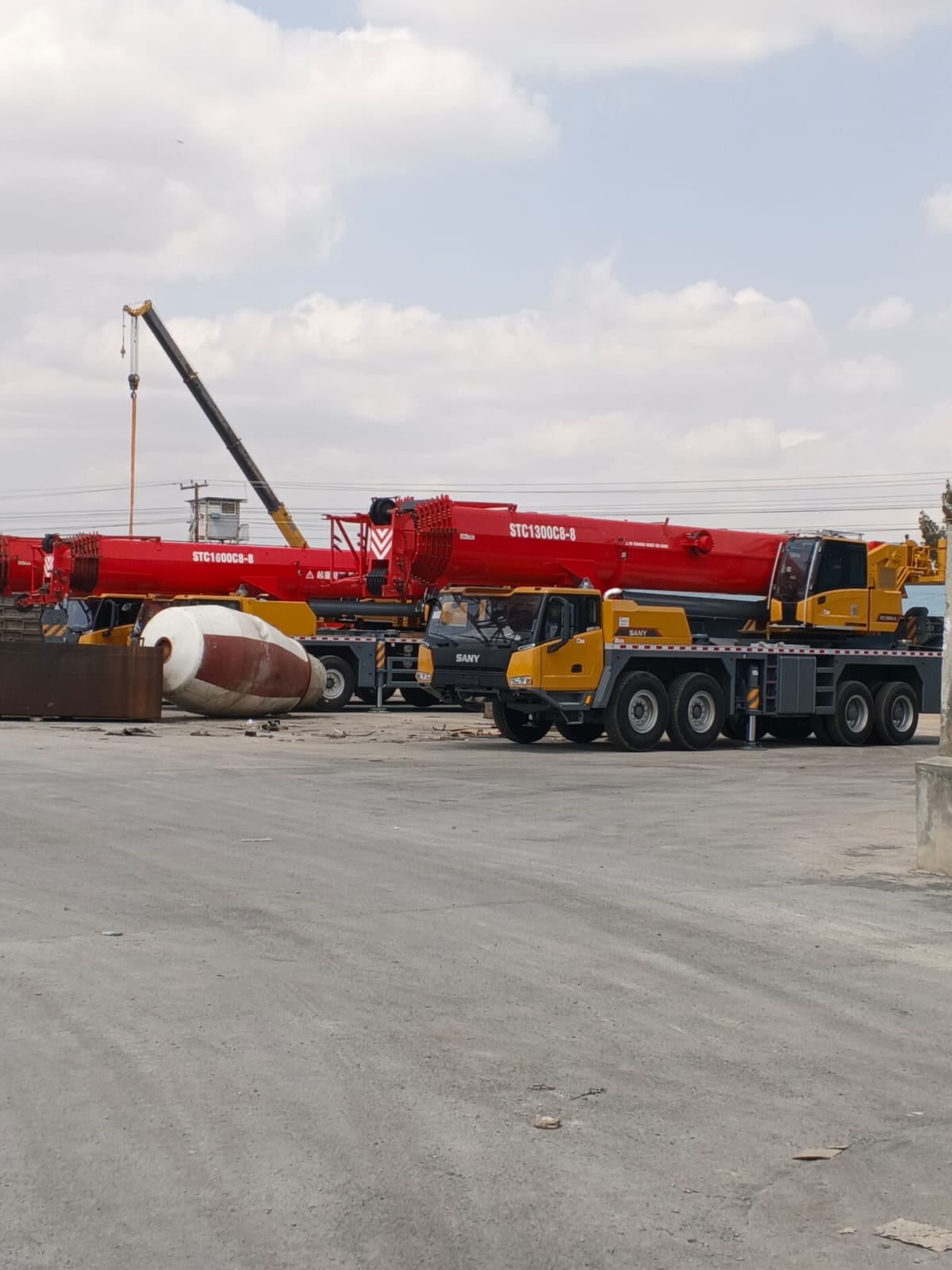
Experience matters most in the situations that are not in the manual: a load that wants to rotate, a blind lift, a radius that changes as the boom comes over.
Crane Operators and Rigging: options, industries and applications
What operators cover
- Load chart interpretation
- Lift planning
- Blind and tandem lifts
- Signalling and banksman liaison
- Pre-use inspection
- Site risk assessment
- Sling and shackle selection
- Lift point assessment
- Centre of gravity checks
- Tandem lift coordination
- Lift plans and method
- Load stability control
Industries we support
- Construction
- Manufacturing
- Infrastructure
- Energy
- Marine and ports
- Marine
Typical applications
- Routine site lifting
- Complex and tandem lifts
- Plant installation
- Shutdown and maintenance work
- Machinery installation
- Steel erection
- Tandem lifting
- Awkward and unbalanced loads
- Plant removal
Operators for our machines, and for yours
Every crane we hire out comes with an operator. Separately, we place operators on client-owned machines, which is common where a contractor has bought a crane but has no certified operator available for a particular period.
In both cases the operator carries out a pre-use inspection before the first lift of the day.
Where crane operator service fits
Crane Operator Service is not the right answer to every lifting problem, and it is worth being clear about where it fits before you book one.
The sectors that use it most here are construction, manufacturing, infrastructure, energy and marine and ports. That is not a marketing list: those are the industries whose problems this machine was designed around, and it shows in how straightforward the jobs tend to be.
In practice the work divides into a handful of recurring tasks: routine site lifting, complex and tandem lifts, plant installation, shutdown and maintenance work. If your job resembles one of those, this is almost certainly the right machine and the conversation will be short.
If it does not resemble any of them, that is worth saying when you call. It usually means either a different machine or a different approach entirely, and finding that out at the quoting stage costs nothing.
The load chart is the job
Reading the chart correctly for the configuration actually rigged, in the radius actually being worked, is the core of the role. Most crane incidents trace back to a lift that the chart never permitted.
Our operators will stop a lift that the chart does not support, and that is a feature of the service rather than an obstruction.
Working with your team
The operator works to your banksman and your lift plan where you have one. Where you do not, we will help you produce one, and for anything complex we recommend hiring a rigging crew alongside.
Operators for machines you already own
A common situation: a contractor has bought a crane but has no certified operator available for a particular period, through leave, turnover or simply a second machine arriving before the second operator does.
We place operators on client-owned machines for exactly this. The operator carries out a documented pre-use inspection on your machine before the first lift, and will report defects rather than work around them, which is generally worth having regardless.
Where a machine has been standing or has an unclear maintenance history, expect that inspection to be thorough. An operator who signs for a machine is accepting responsibility for it.
What experience actually buys you
Certification establishes that someone can operate the machine. Experience shows in the situations that are not in any manual: a load that wants to rotate as it leaves the ground, a radius that changes as the boom comes over, a blind lift where the operator is working entirely on signals.
It also shows in what does not happen. Experienced operators do not need to correct a swinging load because they did not start one, and they place a load once rather than nudging it into position. On a programme with hundreds of lifts, that difference is measured in days.
Sling angle changes everything
As slings spread wider from vertical, the tension in each leg rises sharply. A load that is comfortably within the crane's capacity can still exceed the rated capacity of the slings holding it, and that is a calculation, not a judgement call.
This is the single most common thing we are called in to correct on sites doing their own rigging.
Centre of gravity and rotation
A load whose mass is off-centre will swing to find its balance the instant it is airborne. On a machine being lifted into a factory bay with a metre of clearance, that swing is the difference between an installation and an incident.
We establish the centre of gravity before the lift and rig to it, using tag lines to control rotation.
Tandem lifts
Two cranes on one load requires matched speeds, an agreed signalling arrangement and a lift plan every party has read. We coordinate these, and we will not run one on an improvised basis.
What we need from you to quote
Quoting a crane operator service job accurately takes four things, and a photograph usually settles three of them at once. Send them on WhatsApp and you will normally have an answer the same day rather than after a site visit.
What the load is. Roughly what it weighs and what shape it is. A long or awkward item behaves differently from a compact one of the same mass.
Where the machine can stand. A photograph from the likely standing position. We are looking at surface, space, overhead obstructions and how the machine gets in.
How far it has to reach. The distance from the standing position to where the load lands is the number that decides the machine. A short lift close in and a long lift far out are different jobs even when the load is identical.
When you need it. Whether the window is fixed. A lift that must happen inside a shutdown or before a business opens is planned differently from one that can move by a day.
How the hire works
Hire runs by the day unless the job is short enough to price by the half day, and longer bookings are quoted at a weekly or monthly rate that works out considerably cheaper per day than repeat single bookings. If you are running a programme rather than a one-off lift, tell us the duration up front and we will price it that way.
The machine comes with its certified operator. Mobilisation to and from site is quoted separately and depends on distance and access, because a machine that drives itself costs a fraction of one that has to be transported.
We are open 24 hours, Monday to Sunday. Night and weekend work is priced as ordinary hire rather than as a premium emergency callout when it is booked in advance, which is why it pays to plan an out-of-hours lift rather than discover you need one.
Everything is confirmed in writing before the machine is dispatched: the machine, the operator, the window, the standing position and the price.
Safety, certification and what we will not do
Every machine leaves the yard load-tested and maintained on schedule, and every operator carries out a documented pre-use inspection before the first lift of the day. That inspection is not a formality: it is where a damaged sling, a hydraulic weep or a defective limit switch gets found while it is still cheap.
The operator works to the load chart for the configuration actually rigged, at the radius actually being worked. If the chart does not support the lift, the lift does not happen. That is a feature of what you are hiring rather than an obstruction, and it is worth saying plainly at the quoting stage rather than discovering it on the day.
Exclusion zones are maintained under the load throughout, and we will stop if people enter them. On sites where other trades are working through, that coordination is agreed before the first lift rather than negotiated during it.
Where a lift is complex, blind, over occupied space or involves two machines, we agree a lift plan and a signalling arrangement before anything moves, and we will ask for a banksman from your side or provide one from ours.
What goes wrong, and how to avoid it
Almost every job that goes badly does so for one of four reasons, and all four are avoidable at the enquiry stage rather than on the day.
The weight was estimated optimistically. A load described as roughly something turns out to be considerably more, and the machine that travelled cannot lift it. If you genuinely do not know, say so and we will size with margin rather than assume.
The standing position did not exist. The space that looked adequate on a plan is occupied, sloping, or over ground that will not take outrigger loads. A photograph taken from that spot resolves it before anyone travels.
Nobody checked overhead. Power lines, canopies, branches and neighbouring structures constrain the boom path far more often than people expect, and they are not visible in a plan view.
The site was not ready. The crane arrives and waits, because the fixing crew, the propping, the bearings or the access were not in place. Crane time spent waiting is the most expensive time on any site.
None of that is complicated. It is simply worth ten minutes before the booking rather than an hour of standing time afterwards.
Where we do this work in Nairobi
Crane Operators and Rigging comes up constantly in Buruburu and Donholm, where apartment block frame construction on redevelopment plots. We are on site just as often in Eastleigh and Kamukunji.
The same job looks different again in Ngara and Pangani, where apartment and mixed-use block construction. That is why we ask where the site is before we ask anything else.
We cover the whole of Nairobi. See every area we serve, or send us the location and we will confirm what the site needs.
We also serve these areas
- Crane Operators and Rigging in Buruburu and Donholm
- Crane Operators and Rigging in Eastleigh and Kamukunji
- Crane Operators and Rigging in Ngara and Pangani
- Crane Operators and Rigging in Ruaraka and Baba Dogo
- Crane Operators and Rigging in Kasarani and Roysambu
- Crane Operators and Rigging in Ngong Road and Dagoretti
- Crane Operators and Rigging in Kangemi and Uthiru
- Crane Operators and Rigging in Nairobi CBD
- Crane Operators and Rigging in Upper Hill
- Crane Operators and Rigging in Westlands
Frequently asked questions about crane operators and rigging
Are operators included with crane hire?
Yes, always.
Can you supply an operator for our own crane?
Yes. This is common where a contractor owns a machine but has no certified operator available.
Are your operators certified?
Yes, and they carry out a documented pre-use inspection before the first lift of the day.
Will the operator refuse an unsafe lift?
Yes, if the load chart does not support it. That is part of what you are hiring.
Do you help with lift plans?
Yes, and we recommend a rigging crew for tandem, blind or complex lifts.
Will the operator inspect our machine?
Yes, a documented pre-use inspection before the first lift, and defects are reported rather than worked around.
What if the machine has been standing?
Expect the inspection to be thorough. An operator who signs for a machine is accepting responsibility for it.
Will an operator refuse a lift?
If the load chart does not support it, yes. That is part of what you are hiring.
Do you help produce lift plans?
Yes, and for tandem, blind or complex lifts we insist on one.
Do I need a rigging crew as well as a crane?
For routine single-point lifts, no. For anything with awkward lifting points, an off-centre load or two cranes, yes.
Why does sling angle matter so much?
Tension in each sling leg rises sharply as the angle widens. Loads well within crane capacity can still overload their slings.
Can you rig for a crane we hired elsewhere?
Yes, rigging is available as a standalone service.